The ADU Math Just Changed for Virginia Village's Ranch Lots
September 24, 2026
September 24, 2026
Denver made accessory dwelling units legal on almost every single-family lot in the city back in December 2024. Ask around Virginia Village and you will find plenty of homeowners who heard about it, filed it under someday, and moved on. The zoning barrier fell nearly two years ago, yet the neighborhood's ranch lots still mostly look the way they did before the ordinance passed.
That gap between what the law allows and what people actually build usually comes down to money, not paperwork. And the money side of the equation shifted again in March 2026, in a way that has not fully worked its way into how Virginia Village owners think about their lots.
Two separate rule changes did the heavy lifting. The first was Denver's own ordinance, CB24-1303, which took effect December 16, 2024. It opened ADUs to every zone that already permits a single-family home, dropped the old minimum lot size requirement, and removed Denver's owner-occupancy rule, meaning a homeowner no longer has to live in the primary house or the ADU to rent either one out long-term.
The second was Colorado's statewide law, House Bill 24-1152, which required every qualifying city, Denver included, to fall in line by June 30, 2025. The state law set a floor: cities cannot mandate owner-occupancy, cannot impose ADU-specific minimum lot sizes, and cannot apply design standards to an ADU that are stricter than what applies to the primary house. Denver's own ordinance had already gone further than that floor in most respects.
The city council did not treat this as a minor technical fix. As the Denver Gazette reported, Denver City Councilmember Chris Hines described Denver during the November 2024 hearings as "a more complex land use environment than probably any other city in Colorado," a line that captures why the rules took two years of committee work to finalize even after the state law forced the issue.
If you already knew all of that, you are not alone. Plenty of Denver homeowners heard the ADU-legalization headline in late 2024 and stopped reading there. The part that matters more for Virginia Village specifically is what happened next.
According to Kindred Tiny Homes, detached ADU size in Denver is not a flat number. It scales with the lot underneath it. A lot under 6,000 square feet tops out around 650 square feet of ADU. A lot between 6,000 and 7,000 square feet can go up to 864 square feet. Anything over 7,000 square feet clears the ceiling at 1,000 square feet, the maximum Denver allows regardless of lot size.
| Lot size | Maximum detached ADU |
|---|---|
| Under 6,000 sq ft | About 650 sq ft |
| 6,000 to 7,000 sq ft | 864 sq ft |
| Over 7,000 sq ft | 1,000 sq ft |
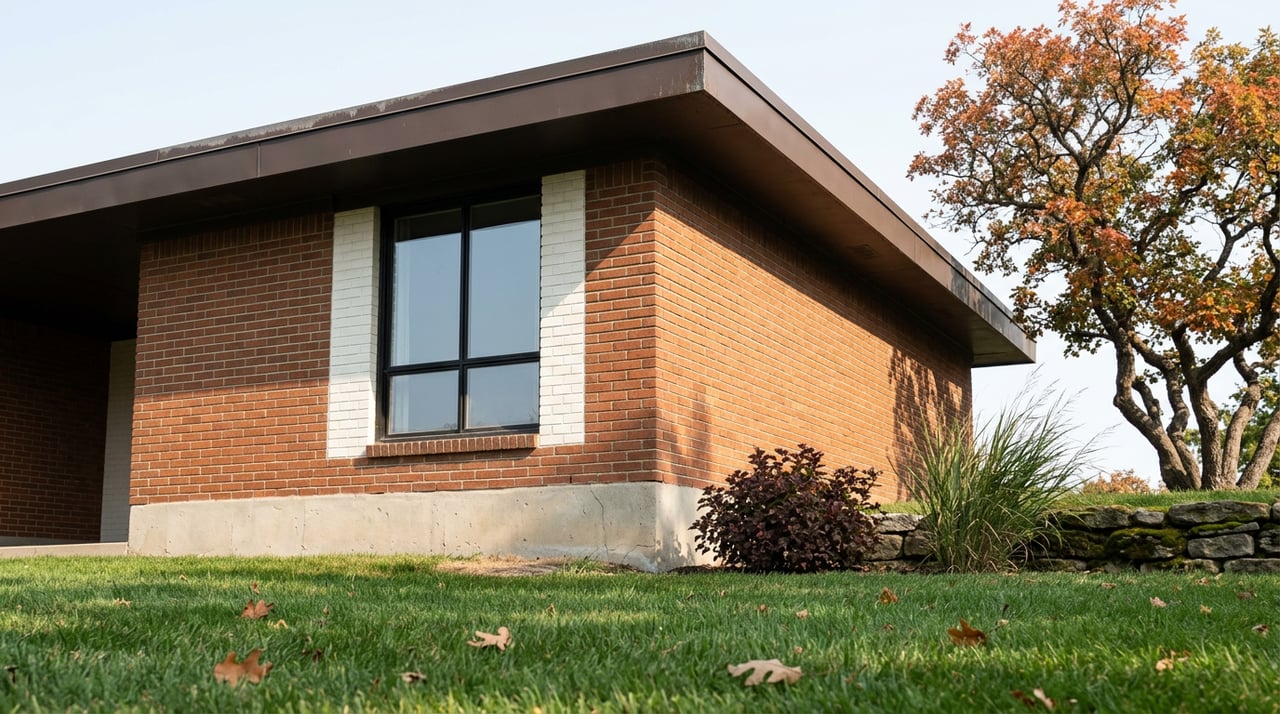
Virginia Village's housing stock runs on lots between 5,500 and 7,500 square feet, which is larger than the typical narrow bungalow lot found in a lot of Denver's older streetcar neighborhoods. That means a meaningful share of Virginia Village properties, particularly in areas like Krisana Park and Lynwood where the mid-century modern architecture runs deepest, sit right at or above the 864 square foot threshold. Some clear the 7,000 square foot line entirely and qualify for the full 1,000 square foot cap.
That distinction matters because square footage is what turns an ADU from a guest room into a genuine second unit with its own kitchen, bathroom, and separate entrance. An 864 square foot unit supports a real one-bedroom layout. A 650 square foot unit is tighter, more studio than apartment. On paper, Virginia Village's typical lot clears a size threshold that a lot of Denver's more famous bungalow neighborhoods do not.
According to Olerra, detached units still have to sit within the rear 35 percent of the lot, stay under 24 feet or 1.5 stories, and keep a minimum 5-foot rear setback. Those geometry rules, not the size cap, tend to be where an architect earns their fee.
Here is the part that changed the calculation more than the zoning ever did. In the weekend of March 21, 2026, Fannie Mae rolled out an update to its Desktop Underwriter system that lets a buyer count documented ADU rental income toward their qualifying income, capped at 30 percent of total income, on purchases and limited cash-out refinances of a one-unit primary residence.
For years, a legal basement unit or a converted garage in a listing was a nice-to-have that lenders mostly ignored on the underwriting side. A buyer looking at a Virginia Village ranch with a permitted ADU could not use that unit's rent to help qualify for the mortgage. According to Mile High Title Guy, they can, provided two things are true: the appraiser identifies the unit as a legal or legal non-conforming ADU under Denver's zoning, and the rent is documented, either through an existing lease or a Comparable Rent Schedule the appraiser prepares.
The word legal is doing real work in that sentence. A basement someone finished in 2019 without pulling a permit is not an ADU as far as an underwriter is concerned. It is a finished basement with a kitchenette in it. In a neighborhood built out in the 1950s and 1960s, where plenty of ranch basements have been informally finished over the decades by owners who never filed for a permit, that distinction is worth sitting with before assuming a home's existing lower level already counts.
Cost estimates for a detached modular ADU in Denver generally land somewhere between $236,000 and $310,000 depending on size and finish level, with a common 490 square foot unit frequently coming in around $245,000 to $285,000 all-in. Smaller units in the 245 square foot range run lower, closer to $175,000 to $215,000, and larger units near the 735 square foot mark can push past $335,000.
On top of construction, Denver Water charges a separate ADU System Development Charge. That fee sat at $2,055 inside Denver and $2,870 outside the city limits through the end of June 2026. It stepped up on July 1, 2026, to $2,170 inside Denver and $3,030 outside, which is the rate in effect now.
The friction point that catches people off guard is not the SDC. It is the parking rule tied to garage conversions. Denver does not require a homeowner to add off-street parking for the ADU itself. But if converting a garage removes parking that was required for the primary residence, that parking has to be replaced somewhere else on the lot, and that add-back typically runs another $10,000 to $30,000. On a ranch lot where the garage is the obvious, cheapest conversion candidate, that rule can quietly turn the budget-friendly option into the expensive one.
Timelines run longer than the word administrative suggests. Denver's review process for a compliant ADU application does not require a public hearing or a discretionary design review, but realistic timelines from application to issued permit tend to run four to seven months, with the bottleneck sitting in the city's plan review throughput rather than in the process itself.
One more detail worth knowing before assuming a rental-ready ADU comes with the house: Denver rental licenses do not transfer to a new owner. A buyer who wants to start renting an ADU on day one needs their own license, not the seller's.
Virginia Village has a housing stock that turns over slowly, with the mid-century ranch inventory holding steady rather than getting replaced. That kind of market rewards adding value to what you already have over waiting for the right new listing to come along. An ADU is one of the more concrete ways to do that, and the size cap on most Virginia Village lots gives owners more room to work with than a lot of Denver's older, narrower-lot neighborhoods.
The financing change is the piece that shifts an ADU from a lifestyle upgrade to something a buyer's lender will actually credit. If you are weighing whether to build one before listing, or wondering what a documented, permitted unit does for your home's appeal to a buyer who needs the numbers to work, that is a conversation worth having before you call a contractor.
Does my lot actually qualify for the larger ADU size cap? Lot size alone does not guarantee a specific square footage. The bulk plane, rear setback, and existing structures on the property all factor into what fits. A lot in the 6,000 to 7,000 square foot range technically qualifies for 864 square feet, but a detached garage, mature trees, or an oddly shaped rear yard can shrink that in practice.
Do I have to live in the house or the ADU to rent one out? No, not anymore. Denver's owner-occupancy requirement was removed by the December 2024 ordinance and Colorado's state law prohibits cities from reinstating that kind of mandate. Some ADU guides published in 2026 still describe an owner-occupancy rule as current, which is outdated information.
Does my basement already count as an ADU? Only if it was permitted as one. A finished basement with a kitchenette that was never permitted through Denver's Community Planning and Development department does not qualify for the appraisal treatment or the new Fannie Mae underwriting rule, no matter how long it has functioned as a rental.
If you are trying to figure out what a specific Virginia Village lot can actually support, or want to understand how an ADU might change a home's position on the market, The David Bell Group knows this neighborhood's lot lines and housing stock well enough to walk through it with you. You can also browse current Virginia Village listings and see what the neighborhood's ranch inventory looks like right now.
This article is general information, not legal, tax or financial advice. Consult a qualified professional about your situation.

David Bell is a seasoned Denver real estate professional with a rich background in finance, marketing, and operations, and over $150 million in sales since 2013. A Denver native and former CPA, David brings sharp business acumen from his career with global fashion brands and fitness companies, now pairing it with his passion for real estate to deliver exceptional client experiences. Known for his professionalism, integrity, and personal touch, he helps clients navigate life transitions with ease—whether buying, selling, or finding the right resources for their homes. Working alongside his sister, Nancy Jones, at Milehimodern, David is proud to combine hometown roots with world-class expertise in Denver’s dynamic real estate market.
📍 44 Cook St., #310, Denver, CO 80206
📞 (303) 887-1358


Stay up to date on the latest real estate trends.
October 15, 2026
October 8, 2026
October 1, 2026
September 24, 2026
September 17, 2026

September 10, 2026
September 3, 2026
August 27, 2026
August 20, 2026
The David Bell Group at Milehimodern are expert Denver real estate agents dedicated to helping you find your dream home and assisting with any selling needs you may have. Contact us today to start your home searching journey!