Two Inspection Issues to Know in Virginia Village
October 1, 2026
October 1, 2026
"With a bentonite clay base and water rationing rules from the Denver Water Board, it was difficult to get a lawn going anywhere."
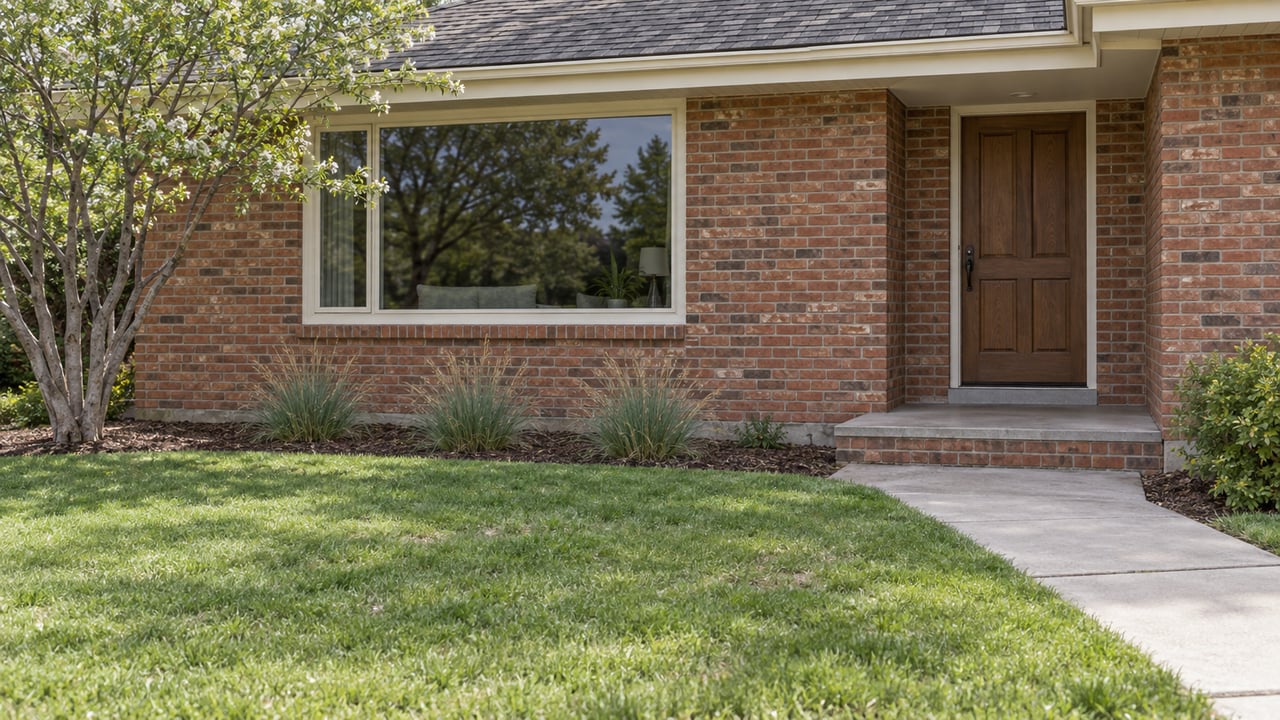
That line comes from the Virginia Village East Community Association's own account of the neighborhood's founding years, when the first ranch houses went up on land that had spent decades as dryland farm ground. The clay under those lots made grass hard to grow in 1955. Seventy years later, it still shows up in a different form: as the hairline crack an inspector points to on a foundation wall, or the sticking door that only bothers a homeowner in August.
That soil is one of two things a Virginia Village inspection report tends to surface, almost regardless of which block the house sits on. The other is the electrical panel. Both are more manageable than they look if a seller knows to get ahead of them. The mistake is treating either one as a surprise instead of as a known pattern with a known fix.
Virginia Village didn't grow the way older Denver neighborhoods did, filling in gradually over half a century. Its first building boom lasted roughly six years. Developer H.B. Wolff broke ground on what became Krisana Park in 1954, eventually building out around 175 homes there through 1957. He marketed it as Denver's first "properly planned" subdivision, with a builder, designer and landscape architect working as one team to keep the exterior colors, materials and setbacks consistent from block to block. A few years later, the Lynwood subdivision followed as what local historians call a sequel to Krisana, with additional modern homes built by Fred Knipher and Lee Kinney around 1959 and 1960. One of the early model homes in the area even carried its own name: the "X-Ray House," a 1,200-square-foot showcase with mahogany paneling and an outdoor lanai, built to sell buyers on a version of the future.
That early building boom helps explain why some of the neighborhood's inspection findings cluster. Homes built within a few years often share the materials and systems standard at that moment, while construction in Virginia Village continued through later decades. Denver's own historic preservation survey of the area describes ranch and split-level construction "held steady since its development in the 1950s, 1960s and 1970s," with very little single-family teardown or infill disrupting that original fabric. The upside of that consistency is architectural integrity that design-focused buyers actively seek out in Krisana Park and Lynwood today. The downside is that whatever was a cost-effective standard in 1956 is now, without exception, an inspection flag.
The most common version of that flag is the electrical panel. Homes built across the Front Range between the 1950s and late 1970s were frequently fitted with Federal Pacific Electric or Zinsco panels, both inexpensive, both widely installed, and both now understood to have a documented flaw: the breakers can fail to trip during an overload, which is the one job a breaker exists to do. A Denver electrical contractor's own list of neighborhoods where these panels still turn up regularly names Virginia Village directly, alongside Harvey Park, Montbello, Bear Valley, Barnum and Englewood.
The two brands look different enough that a homeowner can usually self-identify one from the label inside the panel door. Zinsco panels, sometimes rebranded Sylvania or GTE-Sylvania after a corporate acquisition, tend to have thin breakers with colorful red, blue, green, pink or yellow handles. Federal Pacific panels use a breaker line branded Stab-Lok.
| Panel type | How to spot it | What typically happens next |
|---|---|---|
| Federal Pacific (Stab-Lok) | Label reads "Federal Pacific" or "FPE"; breakers marked Stab-Lok | Many Colorado insurers will not write or renew coverage until it's replaced |
| Zinsco / GTE-Sylvania | Thin, colorful breaker handles; label reads Zinsco, Sylvania, or GTE-Sylvania | Same insurance friction, plus a known risk of breakers fusing to the bus bar |
| Modern panel (Square D, Eaton, Siemens) | Standard black breakers, manufacturer name and UL listing visible | Generally passes without incident |
The financial reality is straightforward once you know it's coming. Denver-metro electricians quote panel replacement anywhere from roughly $3,500 to $10,000 depending on amperage, whether the service mast needs upgrading, and whether the utility coordination adds a step. That's a real number, but it's a known and shoppable one. What actually derails a closing isn't the cost. It's finding out about the panel for the first time during the buyer's inspection period, with a deadline already running and an insurance letter suddenly required before the lender will fund.
The clay is a slower-moving version of the same problem. Denver's expansive soils swell when they take on moisture and shrink when they dry out, and a house built directly on that cycle will show it eventually: a crack along a foundation wall, a door that binds seasonally, a slight dip near a bearing wall. This pattern is routine in Virginia Village, as it is in Park Hill and Harvey Park, and buyers from out of state are the ones most likely to read ordinary seasonal movement as structural failure.
Colorado law has already tested what happens when a seller knows about soil problems and stays quiet. In a case that's now commonly cited in disclosure guidance, a Colorado buyer sued after discovering the sellers had known about expansive soil under the house and never mentioned it. According to Propcash's disclosure guidance, the court held that a seller's duty to disclose known latent defects exists independent of whatever boxes get checked on a standard form. Cracking from clay movement isn't automatically a defect that has to be disclosed. Knowing about a specific, documented soil problem and saying nothing is a different matter entirely.
None of this argues for panic. It argues for sequencing. The fix for the panel question is a licensed electrician's written evaluation, done before the home ever hits the market, stating plainly what type of panel is installed and what condition it's in. If it's a Federal Pacific or Zinsco unit, that same visit can produce a quote for replacement, which a seller can either complete ahead of listing or offer as a credit with the documentation already in hand.
The fix for the soil question is usually smaller in scope. If the cracking is cosmetic and seasonal, which it is in most Virginia Village cases given how the neighborhood was built, a concise engineer's letter saying so is worth more in a negotiation than any verbal reassurance. If a structural fix genuinely is warranted, getting bids before listing means a buyer sees a scope, a cost and a warranty instead of an open question.
According to HomeLight's Colorado seller disclosure guide, the Seller's Property Disclosure form asks directly about both categories: electrical service, wiring and outlet problems on one page, cracks or settling in foundation, walls or floors on another. Neither finding has to threaten a deal. What threatens a deal is a buyer's inspector finding either one cold, three weeks into a contract, with no documentation and no plan already in motion.
Does every Virginia Village home have an old panel? No. Plenty have already been upgraded, especially in homes that have gone through a full renovation. The safest approach is simply having an electrician open the panel and confirm the brand, rather than assuming based on the home's age alone.
Does a foundation crack always mean a structural problem? Not in most cases here. The distinction an engineer draws between cosmetic, seasonal movement and genuine settlement is exactly what a pre-listing letter is for.
Is this specific to Krisana Park and Lynwood? Those two subdivisions are where the pattern is most visible because of how uniformly and quickly they were built, but the same construction era covers most of Virginia Village, so the same two questions apply to a ranch anywhere in the neighborhood.
If you're getting ready to sell a mid-century ranch in Virginia Village, or you're looking at one and want to know what a fair offer accounts for, The David Bell Group can walk through what documentation to line up before the inspection period ever starts.
This article is general information, not legal, tax or financial advice. Consult a qualified professional about your situation.

David Bell is a seasoned Denver real estate professional with a rich background in finance, marketing, and operations, and over $150 million in sales since 2013. A Denver native and former CPA, David brings sharp business acumen from his career with global fashion brands and fitness companies, now pairing it with his passion for real estate to deliver exceptional client experiences. Known for his professionalism, integrity, and personal touch, he helps clients navigate life transitions with ease—whether buying, selling, or finding the right resources for their homes. Working alongside his sister, Nancy Jones, at Milehimodern, David is proud to combine hometown roots with world-class expertise in Denver’s dynamic real estate market.
📍 44 Cook St., #310, Denver, CO 80206
📞 (303) 887-1358


Stay up to date on the latest real estate trends.
October 15, 2026
October 8, 2026
October 1, 2026
September 24, 2026
September 17, 2026

September 10, 2026
September 3, 2026
August 27, 2026
August 20, 2026
The David Bell Group at Milehimodern are expert Denver real estate agents dedicated to helping you find your dream home and assisting with any selling needs you may have. Contact us today to start your home searching journey!