Mid-Century Modern Living In Virginia Village
June 4, 2026
Neighborhoods
June 4, 2026
Neighborhoods
Looking for a Denver neighborhood with real mid-century character, but not a cookie-cutter feel? Virginia Village stands out because it blends postwar design, mature trees, and strong trail access in a way that still feels practical for daily life. If you are drawn to ranch homes, clean lines, and neighborhoods with architectural personality, this guide will help you understand what makes Virginia Village special and what to watch for as you buy or sell here. Let’s dive in.
Virginia Village is a southeast Denver neighborhood that took shape mainly after Denver annexed the area in 1954. Because most of its residential growth followed in the mid-1950s, the neighborhood reads as distinctly postwar rather than early Denver. That development pattern is a big reason the area has such a strong mid-century identity today.
Historic Denver notes that the neighborhood includes about 3,700 primary buildings and one of Denver’s largest concentrations of post-World War II housing. Within that, there are roughly 3,300 single-family homes and more than 100 multi-family buildings or complexes. For buyers, that means you are looking at a neighborhood with real architectural depth, not just a few isolated mid-century homes scattered around.
Part of Virginia Village’s appeal comes from how it was laid out. Early developer Marcus Bogue used gently curving streets to slow traffic and planted or provided residents with hundreds of maples, hackberries, and ash trees. That planning still shapes the neighborhood’s feel, giving many interior blocks a more residential and leafy character than you might expect from the major roads around it.
The boundaries also help explain the experience of living here. Colorado Boulevard and Evans Avenue serve as active commercial edges, while Cherry Creek creates a natural visual and topographic barrier to the north and northwest. In daily life, that often translates to a quieter residential core with easier access to shopping, commuting routes, and services along the perimeter.
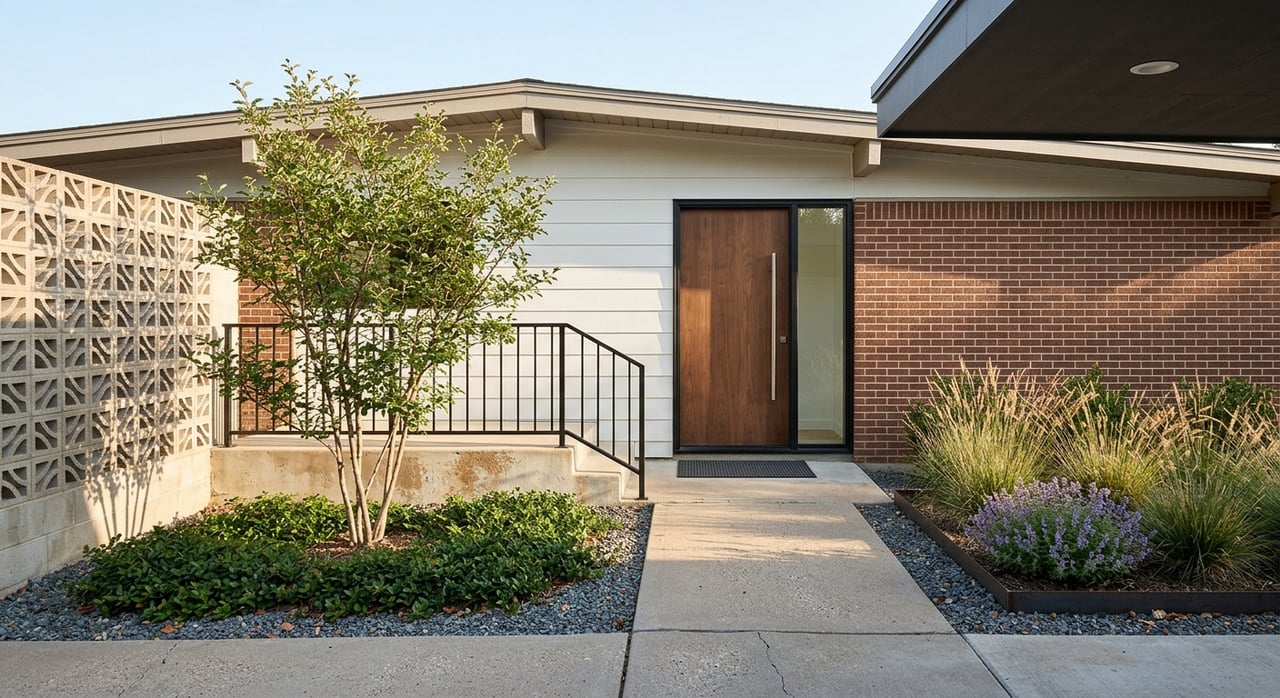
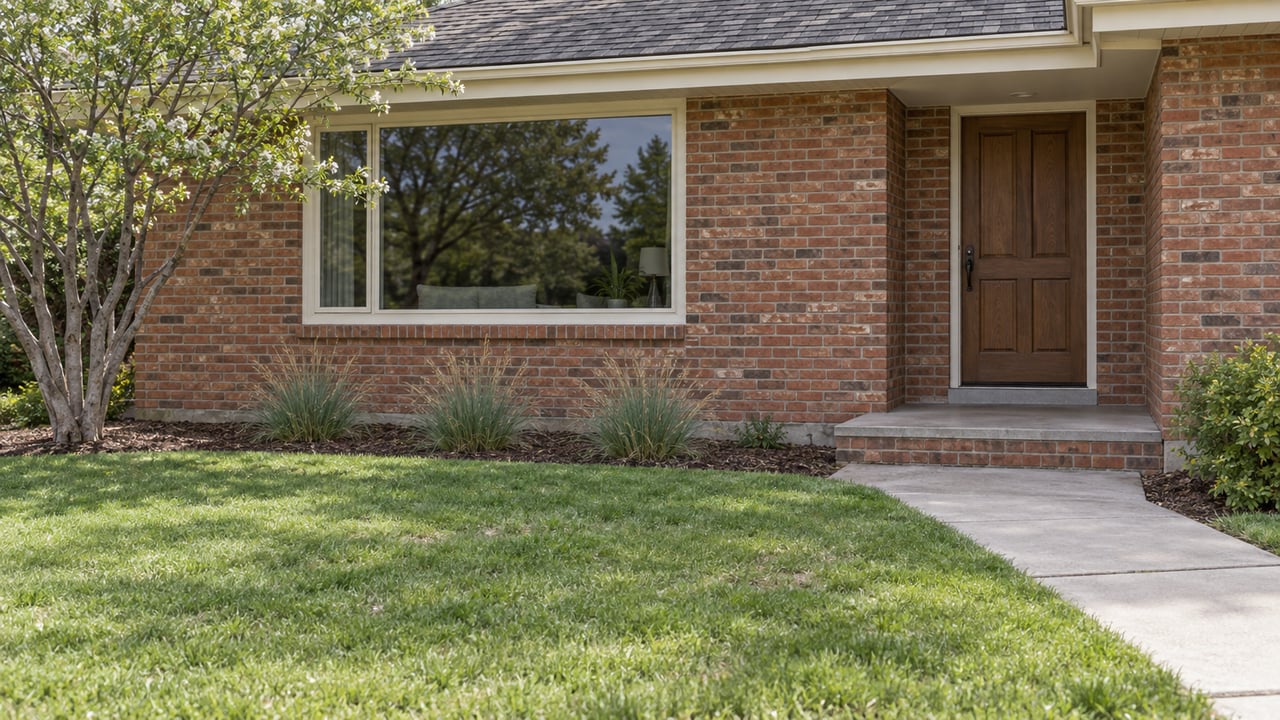
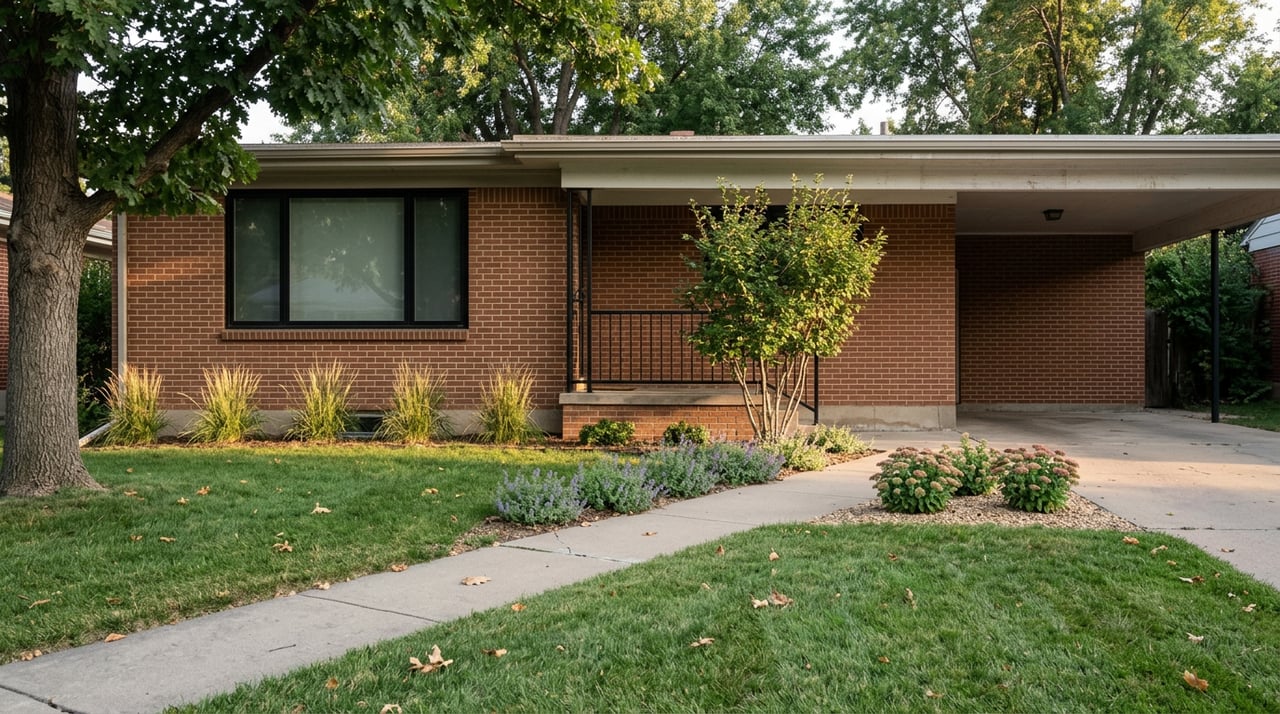
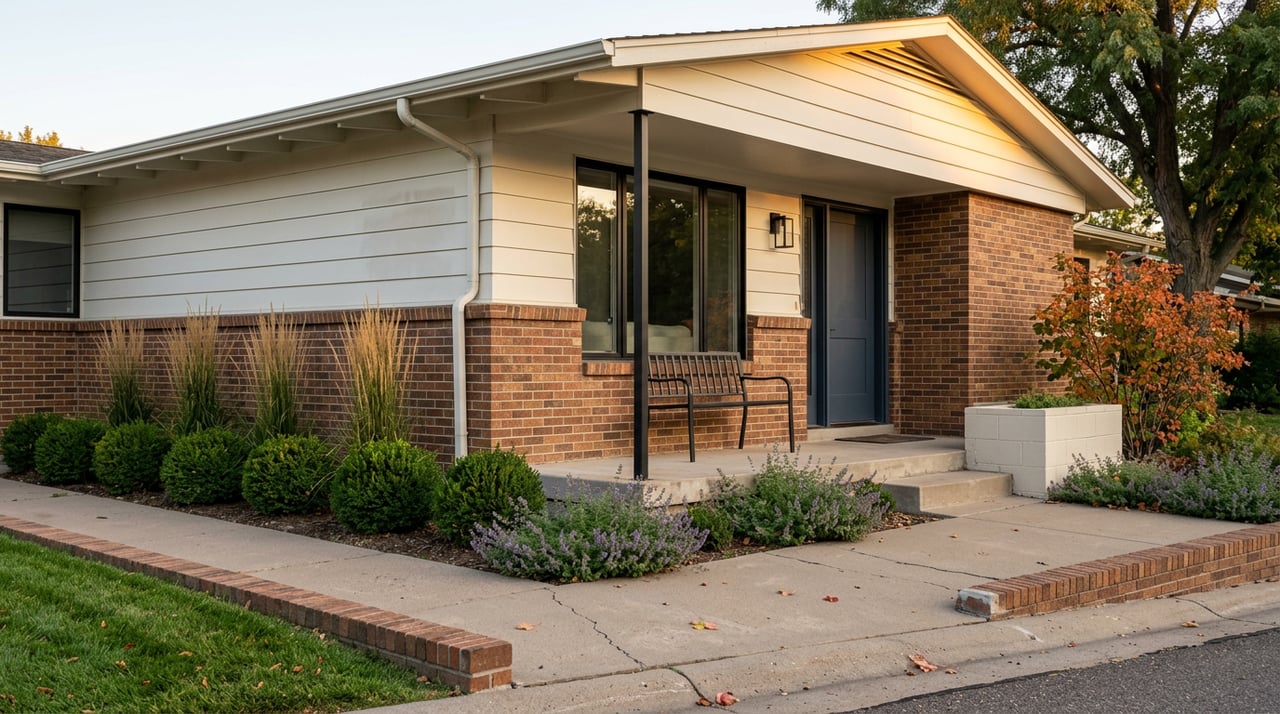
If you picture mid-century living as low rooflines, broad front windows, and easy indoor-outdoor flow, Virginia Village delivers many of those cues. Ranch homes dominate the housing stock, especially homes built from the late 1940s through the 1960s. You will also find split-level and bi-level homes, which add variety without losing that postwar character.
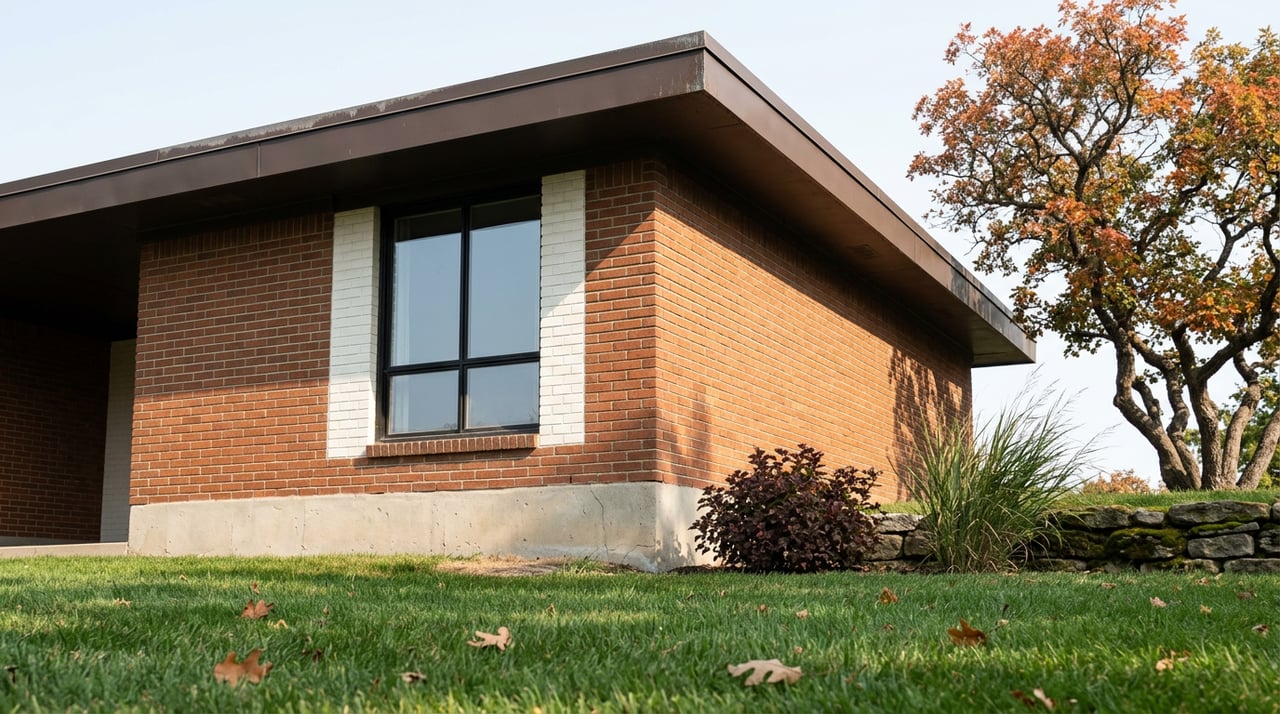
Many homes in the neighborhood share features like shallow eaves, side-gabled or hipped roofs, attached garages, and larger front-facing windows. Those details may sound simple, but together they create the visual rhythm that gives the neighborhood its recognizable mid-century DNA. At the same time, the area is not frozen in one exact style, which is part of the appeal for buyers who want character without total uniformity.
Virginia Village is best understood as a layered postwar neighborhood, not a single preserved Mid-Century Modern district. Historic Denver identifies notable Contemporary or Mid-Century Modern concentrations in Krisana Park, Lynwood First Filing, El Rancho, and the Andrews subdivisions. Hiram B. Wolff is also noted in the survey narrative for embracing the Contemporary style in Virginia Village.
That matters because block-by-block variation is real here. Some sections have stronger concentrations of original design features, while others show more remodeling, additions, or later architectural influences. The 2024 Discover Denver survey found 3,298 buildings with enough integrity for full architectural recording and identified four areas with stronger concentrations of preserved historic fabric, suggesting that authenticity is highly specific to location within the neighborhood.
If you are shopping for a home in Virginia Village, square footage is only part of the story. In a neighborhood like this, original windows, rooflines, glazing patterns, garage placement, lot orientation, and mature landscaping can all affect how much authentic mid-century character a home still offers. Two homes with similar size on paper may feel very different in person.
This is one reason design-conscious buyers often spend extra time comparing blocks and subdivisions here. Some homes retain more of their original architectural language, while others have been updated in ways that shift the style. Neither is automatically better, but your priorities should guide what feels like the right fit.
When you tour homes in Virginia Village, it helps to look beyond the obvious finishes. Consider these details:
A thoughtful home search here is often about matching architecture, livability, and future resale potential.
If you own an updated ranch or a home with clear mid-century roots, Virginia Village gives you a compelling narrative. The strongest story is not just that the home is older. It is that the home sits within a postwar Denver neighborhood known for design variety, planted street trees, and access to major outdoor corridors.
For many buyers, that combination carries real value. They are not just shopping for bedrooms and bathrooms. They are looking for architectural personality, a comfortable neighborhood setting, and a location that supports everyday life without losing a sense of place.
In Virginia Village, presentation matters because buyers often respond to both design details and neighborhood context. A well-prepared listing can highlight:
For distinctive homes, the marketing should connect design and lifestyle in a clear, credible way. That is especially true in a neighborhood where the best-preserved homes and blocks can stand apart from the rest.
Mid-century appeal may draw you in, but livability is what makes a neighborhood work long term. Virginia Village benefits from strong outdoor connectivity, especially through the High Line Canal corridor. Denver Water says the High Line Canal Trail stretches 71 miles across the metro area and supports hiking, biking, jogging, and in some stretches horseback riding.
In this part of Denver, the canal experience is shaped by an urban, paved trail network that connects sidewalks, bridges, parks, and bike paths. There is also a wheelchair-accessible bridge near Holly Street, Ivy Way, and Eastman Avenue, and Denver Water has highlighted a South Quebec Way trailhead and water-quality improvements near Eisenhower Park. For residents, this adds meaningful recreation and mobility close to home.
The tree canopy is a major part of the canal’s appeal. Denver Water and the High Line Canal Conservancy report more than 23,000 mature trees along the corridor, along with ongoing pruning, removals, and replanting with drought-tolerant species. That kind of landscape presence supports the greener, more established feel many buyers want in a postwar neighborhood.
Virginia Village also connects well to the broader trail system. Denver’s Go Speer Leetsdale study describes the Cherry Creek Trail as a 40-mile multiuse route linking downtown Denver and Cherry Creek Reservoir, with connections to the High Line Canal Trail in southeast Denver. Combined with improved crossings at Monaco and Holly over Cherry Creek, the neighborhood offers a practical mix of residential quiet and regional access.
Virginia Village is not standing still. The Near Southeast Area Plan includes the neighborhood and focuses future growth along Colorado Boulevard, Evans Avenue, Leetsdale Drive, and around the Colorado and Yale RTD stations. At the same time, the planning framework aims to preserve neighborhood values and add housing options.
For buyers and sellers, that likely means the edge corridors may continue to evolve faster than the residential interior. The interior streets are still the neighborhood’s main architectural draw, while the perimeter may see more visible change over time. That contrast is worth understanding if you are thinking about long-term value, lifestyle, or resale positioning.
Virginia Village works well for people who want more than a generic suburban layout or a fully uniform historic district. It offers a strong concentration of postwar homes, especially ranches, plus pockets of Contemporary and Mid-Century Modern architecture that reward a closer look. Add in mature trees, curving residential streets, and excellent trail connectivity, and you get a neighborhood with both style and substance.
If you are buying, the key is to evaluate homes and blocks carefully because character and integrity vary. If you are selling, the opportunity is to present your home within the broader story of design, livability, and location. In both cases, local insight matters because the details are what make Virginia Village shine.
If you are thinking about buying or selling in Virginia Village, The David Bell Group offers local guidance, design-aware marketing, and hands-on support to help you move with confidence.

David Bell is a seasoned Denver real estate professional with a rich background in finance, marketing, and operations, and over $150 million in sales since 2013. A Denver native and former CPA, David brings sharp business acumen from his career with global fashion brands and fitness companies, now pairing it with his passion for real estate to deliver exceptional client experiences. Known for his professionalism, integrity, and personal touch, he helps clients navigate life transitions with ease—whether buying, selling, or finding the right resources for their homes. Working alongside his sister, Nancy Jones, at Milehimodern, David is proud to combine hometown roots with world-class expertise in Denver’s dynamic real estate market.
📍 44 Cook St., #310, Denver, CO 80206
📞 (303) 887-1358


Stay up to date on the latest real estate trends.
October 22, 2026
October 15, 2026
October 8, 2026
October 1, 2026
September 24, 2026
September 17, 2026

September 10, 2026
September 3, 2026
August 27, 2026
The David Bell Group at Milehimodern are expert Denver real estate agents dedicated to helping you find your dream home and assisting with any selling needs you may have. Contact us today to start your home searching journey!