Guide To Buying A Mid-Century Ranch In Virginia Village
June 11, 2026
Buyer Tips
June 11, 2026
Buyer Tips
Looking for a mid-century ranch in Virginia Village? You are not alone, and for good reason. This southeast Denver neighborhood offers one of the city’s largest concentrations of postwar housing, which means you can still find homes with the clean lines, low profiles, and practical layouts that make mid-century ranches so appealing. If you want to buy with confidence, it helps to know what is typical here, which updates add value, and what can change a home’s long-term appeal. Let’s dive in.
Virginia Village covers about 1,300 acres in southeast Denver and includes a large collection of post-World War II homes. According to the Discover Denver survey, 3,545 properties were documented in the neighborhood, and 3,298 retained enough historic physical integrity to record full architectural details.
That matters if you are drawn to authentic mid-century design. The neighborhood has a high overall level of historic integrity, and compared with similar Denver subdivisions, it has seen relatively few single-family demolitions and replacements. In simple terms, many homes still look and feel like the ranches they were built to be.
For buyers who care most about architecture, Krisana Park and Lynwood are especially notable pockets. Krisana Park also has a CO-5 conservation overlay, with design guidance meant to help owners add space while preserving the low rooflines, single-story scale, and original neighborhood aesthetic.
Ranch houses are the most common housing type in Virginia Village. Most are single-story homes with a layout organized into automobile space, living space, and sleeping space.
In practical terms, you will often see elongated rectangular or L-shaped footprints, low-pitched roofs, deep eaves, brick veneer or brick-and-siding exteriors, and attached garages. Earlier ranches often had one-car garages, while two-car garages became more common by around 1960.
Many early homes in Virginia Village were built as two- or three-bedroom ranches with no garage or a single-car garage. That history helps explain why some homes still have compact main-floor footprints, even when later owners updated or expanded them.
One of Virginia Village’s biggest advantages is lot size. Sample current listings show lots roughly ranging from 6,100 to 8,250 square feet, with many ranches sitting around 7,400 to 8,000 square feet.
Home size can vary quite a bit. Some smaller ranches are around 936 to 1,272 square feet, while expanded or basement-finished homes can reach 1,700 to more than 2,000 square feet.
That extra lot space changes how many homes evolve over time. In Virginia Village, second-story additions are rare because owners often have enough room to expand outward instead of upward. For buyers, that can be a real advantage because it helps preserve the neighborhood’s original single-story character.
Not every ranch lives the same, even when square footage looks similar on paper. As you tour homes, pay attention to how the main floor flows and whether the layout still feels balanced.
A strong mid-century ranch often has clear separation between living areas and bedrooms, plus simple, efficient circulation. If the home has been opened up, look at whether the changes still make sense with the original structure instead of feeling forced.
Basements can also change the value equation. A finished basement may give you more usable space for guests, work, hobbies, or media rooms, but the main-floor layout is still the core of how the home lives day to day.
Virginia Village ranches have often been updated over the years, and many changes are fairly typical. Historic Denver’s survey found common alterations such as vinyl replacement windows, siding replacement over original wood siding, rear additions, and conversions of street-facing single-car garages into living space.
The good news is that not every change hurts the home’s appeal. The survey notes that window size is rarely altered, and many updates are considered minor if they do not affect the home’s overall feeling or design.
Current listings also show the kinds of improvements that tend to resonate with buyers today, including:
These updates can improve daily livability without necessarily erasing the character that made the house appealing in the first place.
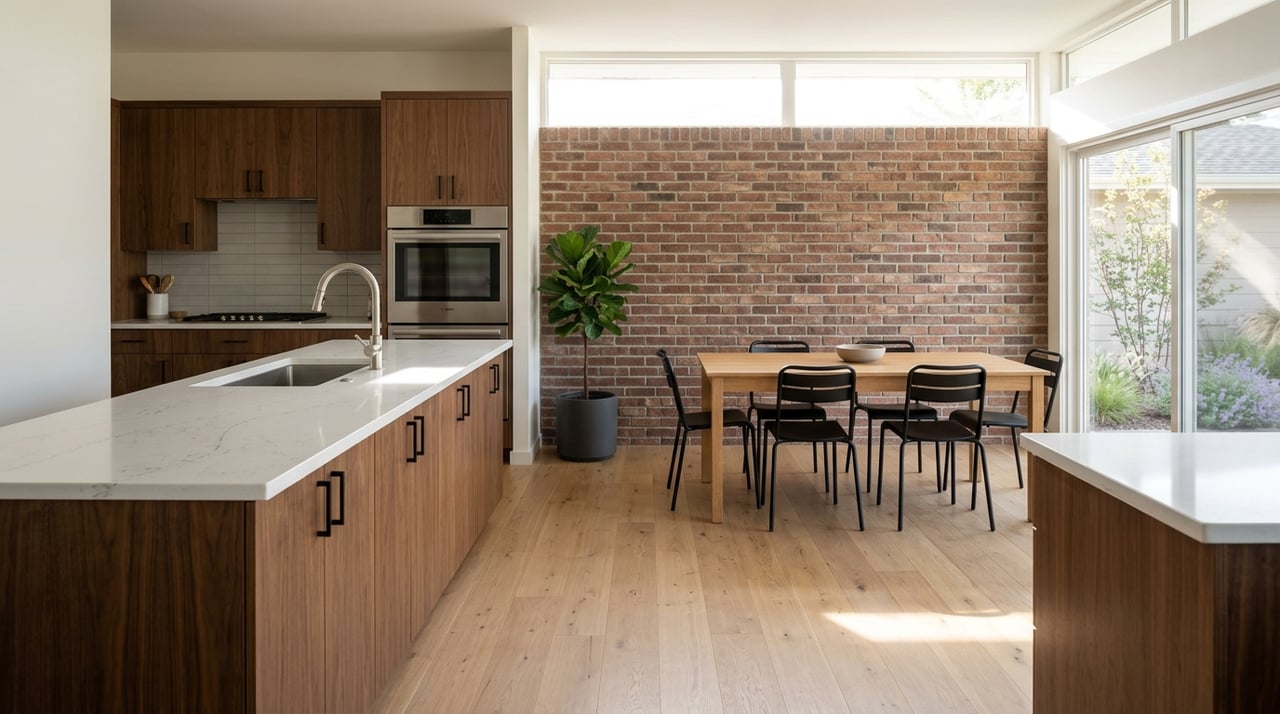
When you buy a mid-century ranch, it helps to look beyond cosmetics. Fresh paint and a stylish kitchen are nice, but the more important question is whether the house still reads as a ranch from the street.
The more significant exterior changes are usually the ones that affect height, setback, massing, roofline, or the compatibility of additions. A home can be nicely updated and still be a strong candidate, but if a remodel disrupts the original silhouette or front elevation, it may feel less cohesive over time.
This is especially important in a neighborhood like Virginia Village, where the overall character remains unusually intact. Buyers who value architecture often place real weight on a home’s original form and how respectfully it has been updated.
When you find a home you like, use a simple framework to compare it against others. This can help you avoid overpaying for surface-level improvements while missing the bigger picture.
Focus on these questions:
In Virginia Village, the best value often comes from the intersection of original character, sensible updates, and a lot that still feels generous by Denver standards.
As of April 2026, Redfin reports a Virginia Village median sale price of $609,773 and 24 median days on market. Zillow reports a typical home value of $612,491, 70 homes for sale, a median list price of $650,000, and 36 median days to pending.
The neighborhood is considered somewhat competitive. Some homes receive multiple offers, and average homes sell about 1% below list price.
For ranch buyers, the key takeaway is that pricing can vary a lot even among homes that seem similar at first glance. Sample listings show an updated 960-square-foot ranch on an 8,250-square-foot lot around $505,000, a 936-square-foot remodeled ranch on a 7,405-square-foot lot around $582,000, and a renovated mid-century modern ranch on an 8,040-square-foot lot around $795,000.
That spread tells you something important. Block, condition, lot position, and renovation quality can move price materially, even before you get to square footage.
If you are wondering why one ranch feels like a bargain and another seems priced at a premium, the answer is usually a mix of design, condition, and context. The most desirable homes tend to preserve their original form while offering thoughtful updates that improve comfort and function.
Location within the neighborhood can matter too. Buyers who want especially intact pockets or stronger architectural identity may focus on areas like Krisana Park or Lynwood.
Long-term appeal also supports value here. Virginia Village benefits from durable postwar housing stock and limited single-family replacement, which helps preserve the character that attracts design-conscious buyers in the first place.
A home is never just the house itself. Virginia Village’s location in southeast Denver adds to its ongoing appeal, with access to downtown, the Denver Tech Center, I-25, and Colorado Boulevard.
The High Line Canal is another meaningful draw. It remains a 71-mile linear park with walkable, bikeable, and equestrian-friendly segments and access points, giving buyers a lifestyle feature that is hard to replicate.
For many buyers, that blend of architecture, lot size, and connectivity is what makes the neighborhood work so well. You get a home with character in a part of Denver that stays practical for daily life.
If you are serious about buying in Virginia Village, it helps to stay disciplined. The neighborhood’s ranch homes can look simple from the outside, but the details often make a big difference in value and resale potential.
Start with your non-negotiables. Decide whether you care most about original character, move-in-ready updates, larger lot size, basement space, garage function, or a specific pocket of the neighborhood.
Then compare homes with a design-aware lens. A smaller but better-preserved ranch may be a smarter buy than a heavily altered home with flashier finishes, especially if you care about long-term appeal.
Finally, move with context. In a somewhat competitive market, you want to understand not just what looks good online, but why one home deserves a stronger offer than another.
If you want help sorting through the details of Virginia Village ranches, The David Bell Group brings local market insight, a design-conscious perspective, and calm guidance to help you buy with clarity.

David Bell is a seasoned Denver real estate professional with a rich background in finance, marketing, and operations, and over $150 million in sales since 2013. A Denver native and former CPA, David brings sharp business acumen from his career with global fashion brands and fitness companies, now pairing it with his passion for real estate to deliver exceptional client experiences. Known for his professionalism, integrity, and personal touch, he helps clients navigate life transitions with ease—whether buying, selling, or finding the right resources for their homes. Working alongside his sister, Nancy Jones, at Milehimodern, David is proud to combine hometown roots with world-class expertise in Denver’s dynamic real estate market.
📍 44 Cook St., #310, Denver, CO 80206
📞 (303) 887-1358


Stay up to date on the latest real estate trends.
September 17, 2026

September 10, 2026
September 3, 2026
August 27, 2026
August 20, 2026
August 13, 2026
August 6, 2026
August 6, 2026
July 23, 2026
The David Bell Group at Milehimodern are expert Denver real estate agents dedicated to helping you find your dream home and assisting with any selling needs you may have. Contact us today to start your home searching journey!