Why Wash Park's Median Price Doesn't Tell You What You're Buying
August 20, 2026
August 20, 2026
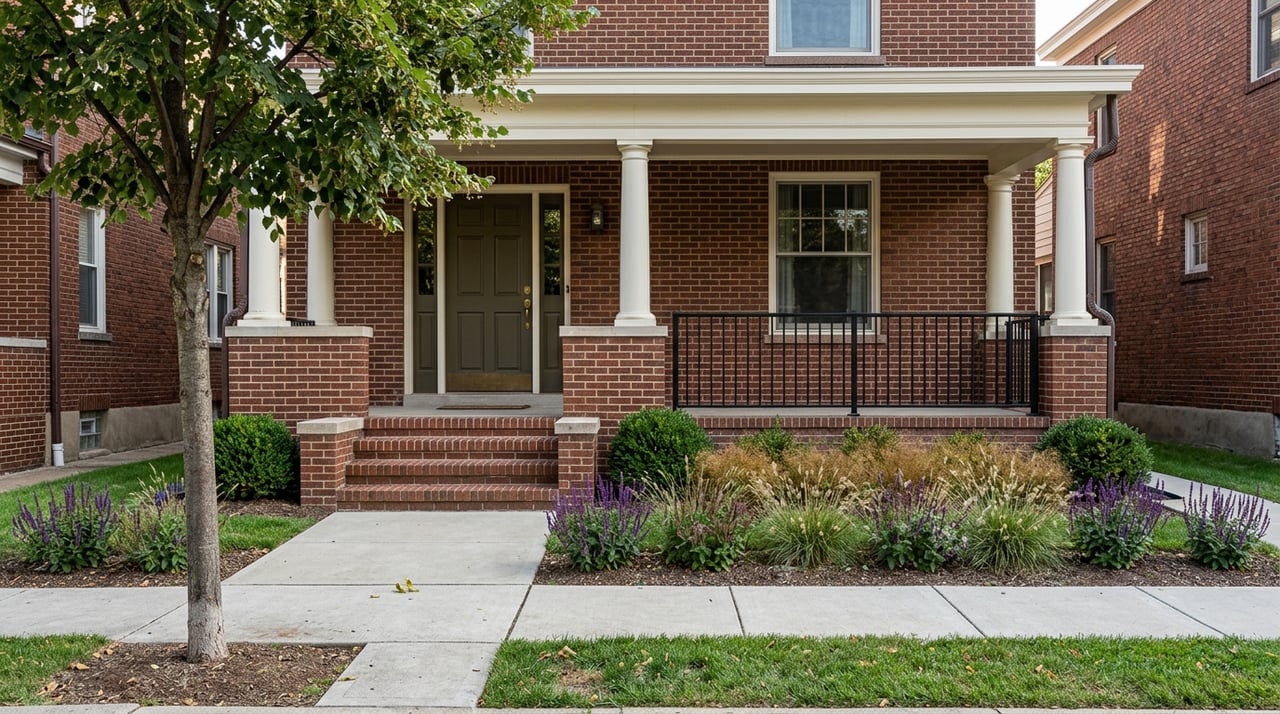
Walk two blocks on South Franklin Street and you can find two nearly identical 1940s brick bungalows, same square footage, same lot width, listed within a few months of each other. One sells for $1.1 million to a family that spends the next year restoring the original woodwork. The other sells for $1.4 million to a builder who has it down to the foundation within six weeks. Same neighborhood, same era, same bones. The $300,000 gap has nothing to do with kitchens or bathrooms.
That gap is the thing a median price can't show you. When people quote Wash Park's price per square foot, they're averaging two different transactions that happen to look alike on paper: a house being bought as a house, and a house being bought as a demolition site with a temporary structure attached. If you don't know which market a specific listing belongs to, you'll misjudge both the price and what you're actually negotiating for.
In 2025, the Denver Gazette profiled the pattern directly, describing bungalows fetching $1.3 million to $1.5 million purely for what agents call scrape value before being rebuilt into custom homes topping 5,500 finished square feet. Sotheby's International Realty agent Casey Miller, who has worked in Wash Park for two decades, pointed to a specific case at 840 S. Gaylord Street, a 1940s-era bungalow a block and a half from Max Gill & Grill, as the kind of property that draws what he called a circular pattern of buyers who leave Denver for the suburbs and later move back for the walkability. He described his own client base bluntly: "A ton of my business is a circular flow."
Some of those clients buy the bungalow to live in it. A growing number buy it to remove it. Builders are now fronting land and demolition costs on spec, betting the new construction sells before it's even framed. That's not a speculative side note. It's a structural feature of how Wash Park prices itself, and it means the comps a buyer pulls up on a portal are quietly mixing two incompatible products under one roof style.
Wash Park was platted with narrow urban lots, typically 25 or 50 feet wide and 100 to 125 feet deep, with corner lots, through-lots, and combined parcels commanding real premiums over standard interior parcels. Appraisers isolate land value one of two ways: pulling recent teardown or vacant-lot sales and adjusting for width, depth, and proximity to the park, or estimating what it would cost to replace the existing structure and subtracting that from the sale price, treating the remainder as land value.
Either method leads to the same conclusion for a lot of Wash Park inventory. When the existing home is smaller or older than what current buyers expect, the land can represent the majority of the sale price, whether or not anyone involved calls it that out loud.
Three questions separate a house-priced listing from a land-priced one before you write an offer:
Once you know a share of Wash Park sales are land trades, the neighborhood's price-per-square-foot premium over its South Denver neighbors starts to make more sense. Realtor.com's April 2026 data put Wash Park around $571 per square foot, with a median sold price near $1.65 million against a median listing price above $2 million. Platt Park, similar architecture and walkability but far fewer teardown transactions, priced around $450 per square foot in early 2026 market tracking, and its median sale price still climbed to $984,669 by May 2026. Bonnie Brae, built in the same era with comparable lot sizes, priced meaningfully lower still, around $415 per square foot in that same early 2026 read.
| Neighborhood | Typical price per square foot | What's driving it |
|---|---|---|
| Wash Park | Around $571 (Realtor.com, April 2026) | Park perimeter demand plus active scrape-and-rebuild activity |
| Platt Park | Around $450 (early 2026 tracking) | Similar bungalow stock, much less rebuild pressure |
| Bonnie Brae | Around $415 (early 2026 tracking) | Comparable era and lot sizes, quieter rebuild market |
For scale, the entire Denver metro's median closed price sat at $605,000 in April 2026. Wash Park isn't just a premium neighborhood. It's a neighborhood where a meaningful slice of the premium is being paid for future construction rights, not current livability.
This is also why Wash Park's headline numbers look inconsistent depending on which source you check. Redfin's March 2026 snapshot put the median sale at $1.475 million. Realtor.com's April 2026 read showed a median sold price of $1.647 million and a median list price above $2 million. Those aren't contradictions so much as two aggregators sampling a small, uneven pool of transactions where teardown sales and finished-home sales sit in the same bucket. In a market with only a few dozen closings a month, one month's mix of scrape sales versus move-in-ready sales can shift the median substantially without any actual change in what a comparable house is worth.
That's useful information if you're comparing an offer to "the median." The median isn't a stable reference point here. It's a blend that changes composition month to month.
Not every block carries the same version of this story. The highest per-square-foot premiums cluster on the park's direct perimeter, streets like South Downing and South Logan on the west side and South Franklin and South Humboldt on the east, where proximity alone drives both livable-home value and land value upward together. Steele Elementary's attendance boundary overlaps closely with this same premium zone, which adds another layer of demand that has nothing to do with square footage.
Move a few streets inward and the calculation shifts. Interior blocks still deliver full park access on foot or by bike, but they see less teardown activity and a smaller land-value premium baked into the price. For a buyer who wants Wash Park's lifestyle without competing against builders bidding on dirt, those interior blocks are where more of the purchase price is still going toward an actual house.
There's a smaller upside here too. Many original Wash Park lots included alley-facing carriage houses, and Denver's expanded accessory dwelling unit rules have made those structures, or the rear yard space behind them, a legitimate source of added value on their own. A lot with existing alley access and depth carries option value that a narrower interior lot doesn't, independent of what's currently built on it.
Does scrape value affect how a lender appraises the home? It can. If the closest comparable sales on a block are teardown transactions, an appraiser has to account for that context rather than treating the existing structure as the primary source of value. This matters most for buyers planning a renovation loan on a home that the market is quietly pricing as a rebuild candidate.
Is Wash Park's premium purely about the park? Partly. Proximity to the park drives real, lasting value. But a growing share of the price difference between Wash Park and its neighbors reflects lot economics rather than lifestyle alone, which is why two similar-looking listings a block apart can land so far apart on price.
How do I know which market a specific listing sits in before I tour it? Ask directly whether recent nearby sales on that block were renovated or rebuilt, and pull the assessor's land-to-improvement ratio for the parcel. Both are quick checks that tell you more than a neighborhood-wide median ever will.
Wash Park's price tag isn't a mystery. It's two markets sharing one zip code, and knowing which one a specific address belongs to changes how you should read the price, structure your offer, and think about what you're actually buying.
If you're weighing a Wash Park purchase against Platt Park, Bonnie Brae, or another South Denver block and want a read on what a specific listing's price is really telling you, The David Bell Group can walk the comps with you street by street. Search All Homes to see what's currently on the market.

David Bell is a seasoned Denver real estate professional with a rich background in finance, marketing, and operations, and over $150 million in sales since 2013. A Denver native and former CPA, David brings sharp business acumen from his career with global fashion brands and fitness companies, now pairing it with his passion for real estate to deliver exceptional client experiences. Known for his professionalism, integrity, and personal touch, he helps clients navigate life transitions with ease—whether buying, selling, or finding the right resources for their homes. Working alongside his sister, Nancy Jones, at Milehimodern, David is proud to combine hometown roots with world-class expertise in Denver’s dynamic real estate market.
📍 44 Cook St., #310, Denver, CO 80206
📞 (303) 887-1358


Stay up to date on the latest real estate trends.
September 24, 2026
September 17, 2026

September 10, 2026
September 3, 2026
August 27, 2026
August 20, 2026
August 13, 2026
August 6, 2026
August 6, 2026
The David Bell Group at Milehimodern are expert Denver real estate agents dedicated to helping you find your dream home and assisting with any selling needs you may have. Contact us today to start your home searching journey!